.svg)


Customer Experience
Elevating CX from reservation to celebration this Ramadan & Eid: A Guide for Food Outlets
When families debate where to break their fast, is your restaurant even part of the conversation?
When families debate where to break their fast, is your restaurant even part of the conversation?


*The following blog post incorporates insights derived in part from data gathered through Lucidya’s AI-powered Monitor solution.
When families debate where to break their fast, is your restaurant even part of the conversation?
Ramadan presents a unique opportunity to showcase your restaurant’s true capabilities and market position. The operational inefficiencies that may be masked during regular business cycles become critical differentiators during that period. This heightened scrutiny happens because Ramadan reshapes customer behavior and expectations. Your guests dine at more specific times, expect perfect service, and have less tolerance for delays. Something that might seem trivial on an average day can feel like a bigger deal when they’re in a more thoughtful and intentional mindset.
This blog post is an invitation to reimagine what’s possible for your restaurant during Ramadan. It’s your chance to rethink your customer journey and value proposition and turn the season’s busiest moments to your advantage. We’ll delve into practical strategies to strengthen your operations, create standout dining experiences, and turn seasonal guests into year-round regulars and loyal brand advocates.
Your customers need to know that you truly understand the significance of Ramadan. During this holy month, they seek three essential elements: convenience, respect, and attentive service that meets their unique needs. Failing to provide these fundamentals has lasting consequences. Not only will customers avoid returning next Ramadan, but they may actively discourage others from visiting or ordering meals from your establishment.
In light of this trend, forward-thinking brands have embraced the power of crafting customer experiences that align seamlessly with where their customers are in their journey. Did you know that 72% of GCC consumers lean toward trusted brands during Ramadan? It is a clear signal that customers value businesses that truly get the essence of this special time.
For restaurants and dining businesses, this is your moment to step up and shine. Every detail of your Ramadan service will shape your reputation, and your customers are already thinking about where they’ll break their fast. Are you ready to welcome them?
First, it is important to understand what you’re facing. Your kitchen, service staff, and dining space will face unprecedented demands during specific hours throughout Ramadan and Eid.
Your local customer base includes thousands of observers seeking meaningful dining experiences. These high-intent guests make deliberate choices about where to break their fast and create lasting memories with family and friends.
Most venues respond with surface-level operational adjustments, including extended hours, increased staffing, and predictable promotions. The result is usually a sea of identical iftar buffets and generic “Ramadan Kareem” messages that blur together in customers’ minds. They miss the deeper opportunity to design thoughtful dining experiences that honor both the spiritual significance of the month and the distinct preferences of their local community.
While others focus on operational metrics, you can differentiate through purpose-built guest experiences. Understanding the common blindspots in your customer experience strategy is the first step toward transforming your restaurant from just another Iftar option into a cherished Ramadan destination.
Recent analysis shows 51% of Saudi consumers dramatically increase food spending during Ramadan, with nearly half their budgets flowing to culinary expenses. The tradition of Iftar is a key factor in this phenomenon, turning restaurants and food businesses into hubs of activity.
For restaurants and food outlets,, the sharp increase in demand gives rise to a number of challenges, including the need to expand operations in a manner that does not compromise quality. However, it also creates opportunities for innovation. Customers may become fatigued with the same options and seek new and exciting alternatives, making creativity in offerings essential. At the same time, campaign innovation—think limited-time menus, themed experiences, or loyalty rewards—can capture attention in a crowded market. It is the brands which are able to balance operational efficiency with imaginative strategies that have the capacity to meet demand as well as convert seasonal customers into loyal patrons.
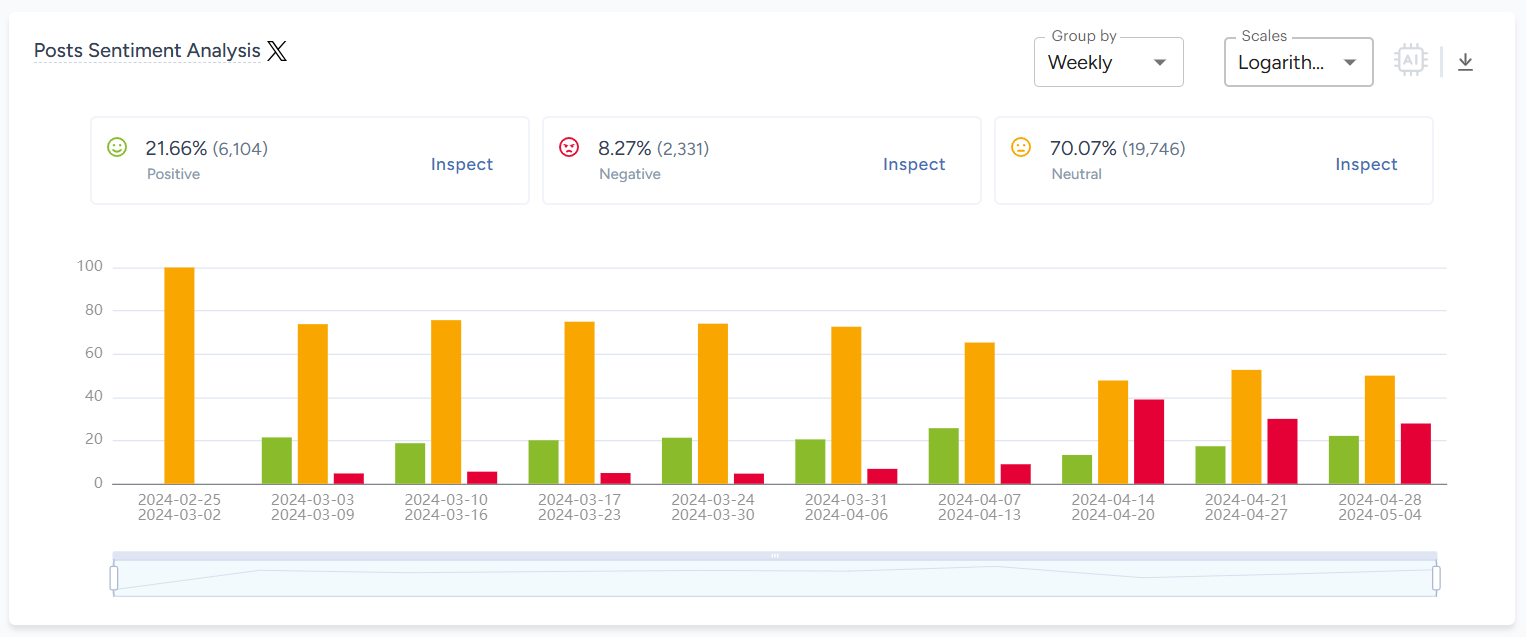
Fig 1.0 – Weekly dining customer sentiment analysis from X (March-April 2024)*
The data from our monitor reveals a dramatic shift in customer sentiment during the 2024 Ramadan-Eid period. While neutral sentiment prevailed overall (70.07%), a critical inflection point is seen in early April (mid-Ramadan), where negative sentiment increased nearly fourfold from baseline levels, reaching almost 40% before moderating slightly.
This volatility provides valuable insights into the challenges and opportunities facing dining businesses during this season. The initial stability in sentiment in early Ramadan gives way to greater volatility as Eid approaches, precisely when families are making their most meaningful dining decisions.
What makes this trend particularly interesting is the timing, as the negative spike coincides with the period when celebration planning intensifies, and customers are most emotionally invested in their dining experiences. Running operations that cannot fulfill the expectations being set is an unsustainable business strategy that puts brands in a vulnerable position with increasingly demanding customers.
The findings suggest that food establishments face a critical reputation window during this period. The businesses that maintain positive sentiment through this challenging period likely possess adaptable systems that accommodate the unique pressures of Ramadan dining, while those contributing to the negative spike may be missing crucial operational and marketing adaptations.
Before exploring specific challenges, this data fundamentally implies that Ramadan is not merely about managing demand. It is a period where customer sentiment undergoes significant alterations, with the potential to permanently reshape perceptions of dining brands.
The Iftar rush is both a blessing and a curse for dining brands. As families and friends gather to break their fast, restaurants host crowds of guests, often leading to packed venues, long wait times, and rushed service. Simultaneously, food delivery platforms witness a dramatic increase in orders as many prefer to celebrate at home, placing pressure on both dine-in operations and delivery logistics. This not only frustrates customers but also strips away the warmth and joy of what should be a meaningful and communal experience. Simply adding more tables, hiring extra staff, or onboarding additional delivery drivers often backfires, as it dilutes the attention to detail that diners crave and frustrates at-home customers.
Many restaurants fail to anticipate the sheer intensity of the Iftar rush, relying on guesswork rather than data to manage demand. Without analyzing past trends or monitoring real-time customer sentiment, they’re left scrambling to address complaints about slow service or overbooked spaces—often when it’s too late to salvage the experience.
Want to fix these CX missteps? Here’s what you can do:
By the second week of Ramadan, even the most beloved dishes can lose their appeal. Customers crave variety, yet many restaurants stick to the same tired menu year after year. This lack of innovation risks pushing diners toward competitors who offer fresh and exciting alternatives.
Some brands attempt to refresh their menus but do so haphazardly, introducing new dishes without considering seasonal relevance or customer preferences. Others ignore competitor trends altogether, missing opportunities to differentiate and captivate their potential clientele.
Want to fix these CX missteps? Here’s what you can do:
Ramadan is a season of relentless marketing, with every brand eagerly competing for a slice of the consumer’s attention. Social media feeds and billboards overflow with promotions, and many dining brands make the mistake of relying on generic and repetitive messaging, which often get lost in the noise. Instead of crafting engaging, experience-driven campaigns, they focus too heavily on discounts, which can diminish perceived brand value.
Another key mistake is not tracking campaign effectiveness in real-time. Brands that don’t monitor audience sentiment and engagement levels risk spending heavily on ads that fail to connect with customers. Without adjusting their messaging based on performance data, they miss the chance to refine and optimize their marketing efforts.
Want to fix these CX missteps? Here’s what you can do:
Ramadan is a season of intention, where every interaction carries weight. This is an opportunity for restaurants to move beyond transactional experiences and create meaningful dining moments, however, without a deep understanding of what your customers value, when they engage, and how they feel, even the most well-planned efforts can miss the mark. Your ability to see your customers clearly and act in ways that feel personal and purposeful makes all the difference.
The solution lies in moving beyond assumptions and embracing a customer-centric approach that prioritizes insight over intuition. True customer experience leadership means anticipating needs before they’re voiced. It’s about using data not as a crutch but as a compass, and to refine operations, personalize offerings, and create unforgettable experiences. Whether it’s reducing wait times, tailoring menus to reflect local traditions, or crafting campaigns that resonate authentically, it’s these actions that build trust and loyalty.
At Lucidya, we believe clarity is the foundation of exceptional customer experiences. Through our AI-powered CXM platform, we enable dining brands to move beyond assumptions, using predictive analytics and actionable, data-driven insights to strategize and act with precision. By turning concrete customer and market data into timely action, you gain the ability to convert Ramadan’s unique challenges into opportunities for meaningful connection, delightful service, and market differentiation.
This Ramadan, your restaurant has the chance to be more than a choice; it can be a tradition. Find out how Lucidya can help you create experiences that honor the season and inspire loyalty. Explore our solutions or contact us for a demo and see the difference clarity can make.


.svg)
Lucidya is the leading AI-native platform for customer experience intelligence in the Arab World. With its unique AI and NLU capabilities, this CXM platform is designed to give brands the power to deliver game-changing customer experiences anywhere in the region.
Lucidya connects all your customer-facing channels — social, media, surveys, and support — into one intelligent system. It turns raw data into actionable insights so your teams can monitor sentiment,tailor messaging, protect reputation, boost satisfaction, all in real time.
Unlike generic AI tools, Lucidya’s AI is developed fully in-house and trained on Arabic — including 15 dialects — ensuring unmatched accuracy for sentiment and tone detection in the MENA region.
Yes. Lucidya complies with Saudi PDPL, GDPR, and SOC2 standards. Data is encrypted, securely stored, and can be hosted regionally to meet compliance needs.
Lucidya is the leading platform for customer experience management in the Arab World. With unique AI and NLU capabilities, this CXM platform is designed to give brands the power to deliver game-changing customer experiences anywhere in the region.
Lucidya is the leading platform for customer experience management in the Arab World. With unique AI and NLU capabilities, this CXM platform is designed to give brands the power to deliver game-changing customer experiences anywhere in the region.
Lucidya is the leading platform for customer experience management in the Arab World. With unique AI and NLU capabilities, this CXM platform is designed to give brands the power to deliver game-changing customer experiences anywhere in the region.
Lucidya is the leading platform for customer experience management in the Arab World. With unique AI and NLU capabilities, this CXM platform is designed to give brands the power to deliver game-changing customer experiences anywhere in the region.

.svg)


.svg)


.png)





%20with%20competitive%20intelligence_640x774.webp)